If many flower and nature lovers travel to Japan in spring to see the wonderful cherry blossoms, you should know that the show put on by Morocco’s wild roses is every bit as spectacular.
You may have already heard of the Valley of Roses, an oasis of gorges following the course of the Assif M’Gouna river, between Ouarzazate and the Dades Gorges. Just outside this valley, in Kelaat M’Gouna, the Rose Festival is held every year between late April and the first half of May. At this time the whole valley is teeming with wild roses blooming here and there among the bushes, drawing visitors from all over the world.
If you’re looking for the best time to visit Morocco, this might be the right one for you.
But why are these “desert roses” called Damask roses? What’s their story?
According to legend, the roses came from Damascus and were brought to Morocco by pilgrims returning from Mecca (the area where they spread is in fact a pilgrimage and merchant trade route), who were struck by their beauty and fragrance and hoped to make a living from them. Fortunately, Damask roses found fertile ground in the Moroccan valley and have always grown in abundance, perfectly able to withstand cold and drought.
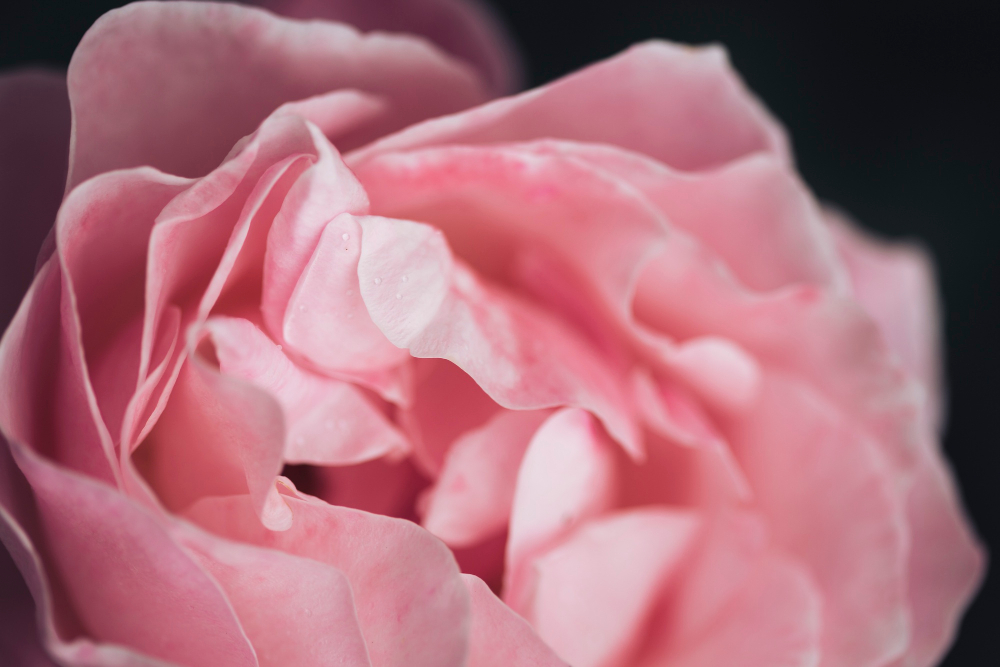
Their distinctive bright pink color is quite unusual compared with the roses we’re used to, but it’s above all their fragrance, much stronger and more intense, that makes them special.
The Valley of Roses, a feast for the senses
The majestic Valley of Roses is an enchanting place that’s still little known. That’s not a bad thing, since it has preserved its authenticity and its power to amaze. It’s usually crossed by trekking enthusiasts following the river upstream, or by people simply admiring the deep ochre rock along the road and the red brick of the old kasbahs.
When the valley is covered in wild roses in spring (they’re also known as the May rose), especially at peak bloom, the intriguing, lingering scent that fills the air from the Dades oases to the valley’s canyons is carried by the desert wind and can be smelled as far as Marrakech. In winter you hardly notice them, hidden among the thick hedges.
For centuries Damask roses were grown by the Berbers, who used their thorny shrubs to protect the edges of their wheat and vegetable fields from animals. To this day they’re used to mark property boundaries and fence the plots where Moroccans grow their vegetables, since the roses’ strong scent keeps animals away.
But the turning point came around the 1930s, when some French perfumers noticed the Damask rose, or rather, smelled its intense fragrance, while they happened to be in Morocco at the height of the bloom.
The result? One of the finest ingredients in French perfumes is Damask rose essential oil. It’s a key ingredient in oriental perfumes too, as those perfumers were wise enough not to strip the area of its roses, but instead set up two factories there to produce oils, essences and perfumes and taught Moroccans how to cultivate the roses, so that tradition could become an opportunity for growth and business for local families too.
Various essences can be extracted from this oil depending on the quality of the petals. The best known is rosewater, but the most precious essence is Rose Absolute. Although it’s the “second choice”, rosewater is a pillar of Moroccan culture: it’s used widely in beauty treatments and in cooking, to flavor sweet and savory dishes, and has even become a symbol of hospitality, offered to guests before they sit down at the table.
By tradition, it’s the women who pick the roses, early in the morning when the buds have just opened, or right after sunset, so as not to lose fragrance or texture. After picking, the women bring the flowers to the kasbah of Kelaat M’Gouna, where the petals are sorted. Some are dried to make the famous potpourri or to scent homes, while the freshest are used to distill essences and perfumes.
In Kelaat M’Gouna you can see the whole rose process, from selecting the petals to drying and processing, with a visit to the Hotel des Roses, home to an essence distillery.
There are also many shops selling rose-based products, and I’m sure you won’t go home without buying one. But while you haggle, remember that to get one kilo of distillate, you need to pick 500 kilos of roses, roughly 250,000 flowers. That’s why Damask rose perfumes are so expensive. So don’t be stingy: pay the fair price the roses, and the handwork behind them, deserve.
Lisa