Walking through the narrow, bustling alleys of the Fez medina, you’ll feel as if you’re crossing the centuries. With its ochre walls, carved wooden doors and workshops facing one another, Fez is home to one of the most extraordinary institutions in the Islamic world and beyond: the University of al-Qarawiyyin, the second historic reason the city is so famous, alongside its UNESCO World Heritage medina.
Founded in 859 AD in the spiritual heart of the city, the University of al-Qarawiyyin in Fez is recognized by Guinness World Records as the oldest university in the world still in operation. How could I not include it on my tours? In the meantime, let me tell you a little about its history.
Centuries of culture in Fez
The building was the vision of Fatima al-Fihri, daughter of a wealthy merchant from Kairouan, in Tunisia, who had emigrated to Fez. Fatima was an educated, devout woman, so she used her father’s inheritance to build a mosque whose purpose was clear from the start: to become a center of learning. In medieval times, scholars, scientists and theologians from all over the Mediterranean began coming to Fez to study philosophy, astronomy, mathematics, Islamic law, grammar, medicine and even music.
The environment became cosmopolitan, and knowledge was valued as a form of devotion and progress. Al-Qarawiyyin also became one of the most significant models of inclusion and openness, as Jews and Christians, too, came to study and teach there. According to tradition, its famous figures include historian and sociologist Ibn Khaldun, philosopher Averroes and Gerbert of Aurillac, the future Pope Sylvester II.
Besides the mosque and study halls, the university houses one of the oldest and most precious libraries in the Islamic world. It was recently reopened to the public (though only partly visitable) after lengthy restoration work that brought to light unique, extremely rare manuscripts, including a 9th-century Quran written on camel-skin parchment, a medical treatise by Avicenna and many astronomical documents with hand-drawn charts. The mosque itself remains closed to non-Muslims, but you can glimpse its architecture and decorations from a doorway.
If you love culture in general, and Moroccan culture in particular, you can discover the role this library played in preserving and passing on Greek, Arab and Persian knowledge to the West. While in Europe many classical works were being forgotten or censored, in the heart of the holy city of Fez they were being copied, studied and taught.
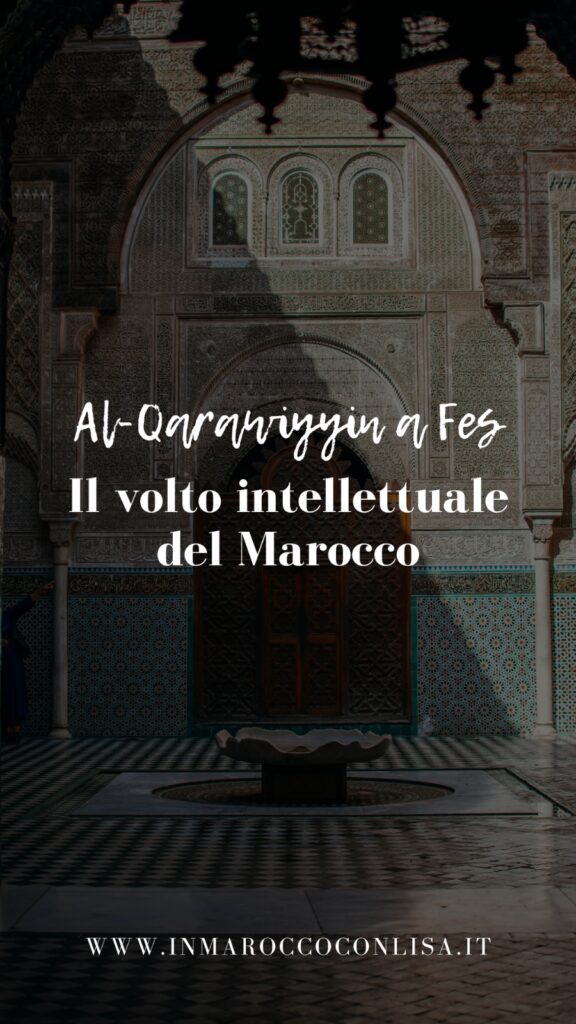
If you prefer Moroccan architecture, next to the library you’ll find a series of white marble courtyards, decorative fountains and zellij tiles that make the university not only a place of study but also living architectural testimony to an era when beauty and spirituality were two sides of the same coin.
Fez beyond the university

Of course, if you choose to visit Fez, your cultural discovery won’t stop at al-Qarawiyyin. Scattered around the city are many madrasas, Quranic schools that are true architectural gems and symbols of the central role of education in Moroccan culture. The most famous are the Bou Inania Madrasa and the Al-Attarine Madrasa, the latter overlooking one of the medina’s liveliest souks.
These schools trained future jurists, imams, scribes and poets, who didn’t just learn religion but also studied many texts on grammar, logic, science and civil law. You can still see the paved courtyards, the students’ cells, the finely decorated mihrabs and the miniature libraries next to the main halls.
As you walk among the columns, admire the carved cedarwood ceilings and get help deciphering the classical Arabic inscriptions carved into stucco or marble, you’ll feel as if you’re traveling back in time, touching a culture in which education was considered not just a right but a duty toward the community and toward God.
If Fez can be called the intellectual face of Morocco, it’s because the city has embodied a broad, rich vision of knowledge. Never limited to the boundaries of Islam, Fez has been a crossroads of cultures, religions and peoples since the Middle Ages. Jews, Christians, Arabs and Persians came to Fez to debate, exchange ideas and work on shared texts.
In fact, Arab and Andalusian scientists who had studied or taught in Fez brought the Arabic numeral system to Europe, along with concepts of algebra and trigonometry, refined astronomical maps, translations of Greek texts and the foundations of modern medicine. Without the influence of Fez, Europe wouldn’t have all the knowledge it has today.
Fez: what is it like today?
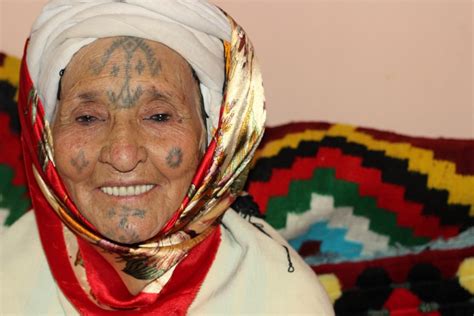
Less touristy than other cities in the Kingdom of Morocco, Fez has a medina home to thousands of Moroccan families who live from crafts and tradition, working leather near the famous Chouara tannery, preparing spices from ancient recipes and passing on craft techniques in small workshops.
So seemingly still and unchanged over time, Fez is a living city, lived in and aware of its cultural and intellectual value, not only in the past but in the present too, since every stone tells a fragment of the long history of Moroccan learning. Don’t you dare call it an “open-air museum”: Fez is a place that still teaches, inspires and welcomes travelers willing to listen.
Lisa