Among the many things you can do to discover the true essence of Morocco, seeking out the many age-old festivals celebrated throughout the year is one of the most authentic. In the beating heart of Morocco, among the dunes of the Sahara, the Atlas Mountains and villages hidden in oases, moussems are a crossroads of the sacred and the secular, of spirituality and collective identity. They aren’t just religious events or village fairs: moussems are the authentic face of Moroccan culture, which is why joining one is an extraordinary, deeply moving experience I highly recommend.
Getting to know the moussem
A moussem in Morocco is a communal festival that can last from one day to several weeks and began, at least originally, as a form of religious pilgrimage. At the center of every moussem is a saint revered by the local population, usually a spiritual figure linked to the Sufi tradition, credited with healing powers and a protective influence over the community.
But a moussem isn’t just an act of devotion. For Moroccans it’s also a social, economic and cultural occasion of huge importance. In rural areas especially, the festival is a gathering eagerly awaited all year, a break from the farming calendar and a chance to forge alliances, trade, celebrate life’s milestones (from weddings to births) and renew collective identity.
Morocco hosts hundreds of moussems, spread throughout the year and across the country. Of course, each moussem has its own features, which vary with the area, its history and regional traditions.
If you’re lucky enough to attend a Moroccan moussem, you’ll come into contact with the most real and intimate side of the country, the less touristy one that still lives by cycles and symbols deeply tied to the land and the spirit. Below I’ll tell you about the best-known moussems.
Moussem of Moulay Idriss
One of Morocco’s best-known and busiest moussems is held in Moulay Idriss Zerhoun, a small town not far from Meknes, famous for the mausoleum of Moulay Idriss I, a direct descendant of the Prophet Muhammad and founder of Morocco’s first Islamic dynasty. Every August, a pilgrimage draws tens of thousands of people from all over the country in an annual outpouring of collective faith that recalls the mystical atmosphere of the hajj, the pilgrimage to Mecca.
During the moussem the town is transformed and decked out for celebration. Moroccans set up tents to host visitors, the streets fill with religious songs and invocations, there are night processions and prayer vigils, and collective rites of purification and blessing are held. The atmosphere is intense and spiritual, but also festive. In Morocco, religion is woven into daily life in a way only the Arab-Sufi world can express.
Moussem of Tan-Tan
Not every moussem centers on spirituality. In many regions of Morocco, the festival also becomes a celebration of equestrian and tribal culture. That’s the case of the famous Moussem of Tan-Tan, part of UNESCO’s Intangible Cultural Heritage, held in the south of the country and one of the largest gatherings of Saharan nomadic tribes.
The most eagerly awaited moment is the fantasia (or tbourida), a spectacular display of horsemen in traditional dress staging cavalry charges, with perfectly synchronized blank shots. The precision of the movements, the elegance of the costumes, the power of the Berber horses and the tension of the final moment (when everyone has to fire at once) are breathtaking. It’s a ritual blending technical skill, martial choreography and pride in identity, rooted in the tribes’ ancient defense practices.
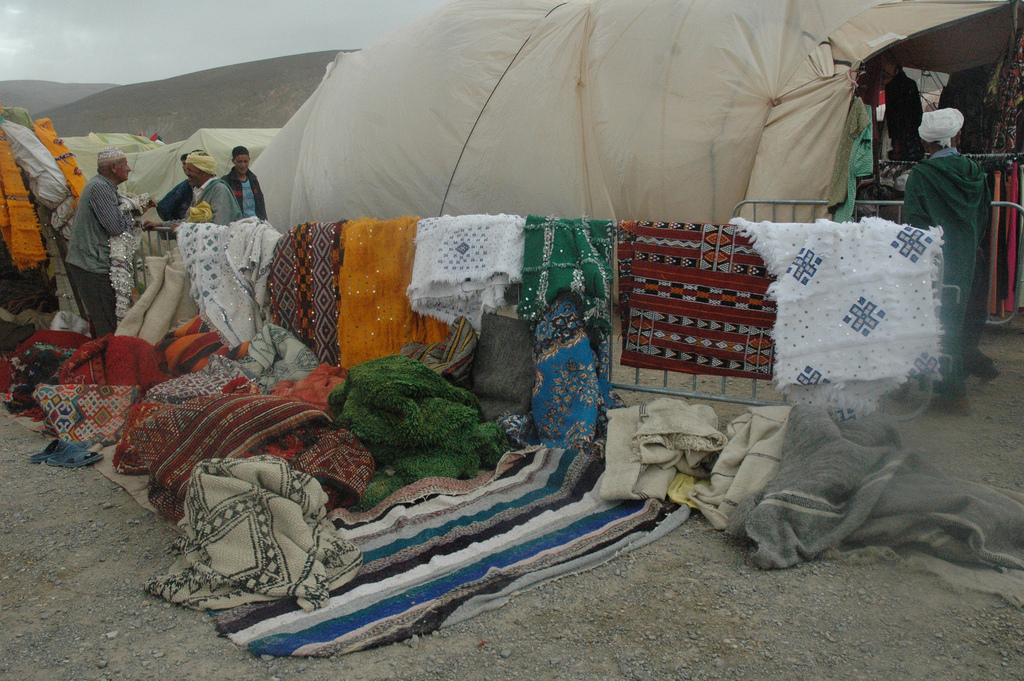
And as if that weren’t enough, the Tan-Tan moussem is also a big open-air market, with displays of crafts, textiles, rugs, spices and copperware.
Rural moussems
Beyond the big official festivals, Morocco has hundreds of local moussems, little known even to many city-dwelling Moroccans, held in small villages in the Atlas, the pre-Saharan oases or the valleys of the High Rif. These moussems keep their original purpose intact: bringing the community together around an event that is agricultural, spiritual and commercial all at once.
One of the most fascinating is the Rose Moussem in Kelaat M’Gouna, in the Dades Valley, which coincides with the blooming and harvest of the famous Damask roses. During the festival, the villages fill with scents and colors, rose oils and waters are sold, and there are dances, beauty contests and flower parades celebrating the land with gratitude and honoring femininity, nature and the harmony between people and landscape.
If your next (or first) trip to Morocco coincides with a moussem, you’ll enjoy an intense cultural experience that goes well beyond a folk event: it’s a chance to see up close how religion, art, music, horsemanship and social life intertwine in Moroccan culture. What’s more, joining Moroccan festivals is a fascinating way to connect directly with people, hear their stories and be welcomed as guests at a celebration that, for all its deep roots, remains open and inclusive.
Lisa