Who among you has read The Little Prince? I knew it: almost everyone, because this book left its mark on so many of our childhoods. Those who let themselves be drawn into it loved it deeply and fell for all the dreamlike places it describes. And yet one of those places really exists, and it’s right here in Morocco.
I’m talking about Tarfaya, a small fishing village founded by a Scottish merchant, which you’ll come across heading south along Morocco’s Atlantic coast. It was here, it seems, that writer Antoine de Saint-Exupéry found the inspiration for one of the most famous stories in the world.
Tarfaya sits among fascinating sand and stone deserts, blue lagoons and golden dunes, right opposite the Canary Islands. If you look up Tarfaya online, you’ll find it described almost everywhere as “the city of the Little Prince”. Let me explain why.
Antoine de Saint-Exupéry and Morocco
Besides being a writer, the Frenchman Antoine de Saint-Exupéry was also a pilot who made flying his lifelong passion. In 1927 he began working for the French airline Aéropostale, when a mail service was launched to the small port of Tarfaya (then called Cape Juby).
So the aviator moved there for almost two years, and since his most famous story is about a pilot who crashes and gets lost in the desert, where he meets a little prince from far away with hair the color of wheat, it’s not hard to imagine that the desert was Tarfaya’s.
What’s more, right at Cape Juby, Saint-Exupéry tamed a little fennec, the so-called desert fox, to keep him company. And the fox is a key character in The Little Prince, symbolizing the value of friendship.
Next to Tarfaya’s beach stands a small monument, a Breguet 14 biplane, the aircraft he usually flew, dedicated to the memory of Saint-Exupéry, who disappeared over the Mediterranean between Corsica and Marseille on July 31, 1944, during a reconnaissance flight.
A lovely story that helps us understand the bond between Tarfaya and the Little Prince, although other works were written there too, including his first book, Southern Mail, inspired by the lives of French airmail pilots. Today the town is also known for a small museum, the Musée Antoine de Saint-Exupéry, where you can discover the thrilling high-flying life of Antoine de Saint-Exupéry, of Aéropostale and of the pilots who worked for it.
Another reason Tarfaya is known worldwide is that since 2014 it has been home to the largest wind farm in Africa, which has helped make Morocco a world leader in renewable energy. The wind farm has 131 turbines, 81 meters (266 feet) tall, spread over 8,900 hectares (about 22,000 acres), harnessing the power of the wind blowing in from the desert.
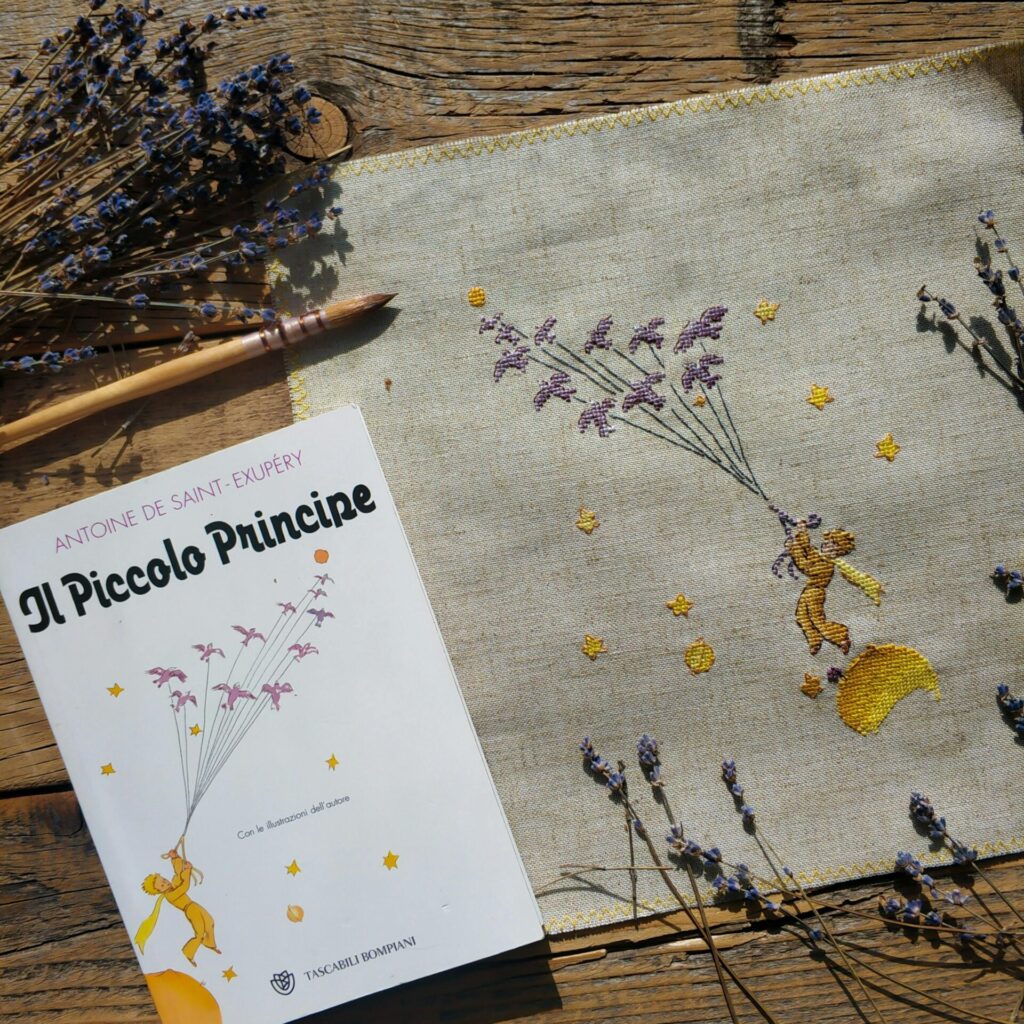
Morocco and the desert fascinate everyone, Saint-Exupéry included
If you’re the kind of traveler who loves visiting the places where your favorite films were shot or your favorite books were set, you’ll be thrilled by your trip to Morocco, all the more knowing that this is where the love affair between Antoine de Saint-Exupéry and Morocco began, and later between Morocco and The Little Prince, one of the most translated books in the world, surpassed only by religious texts, since its first edition in 1943.
I confess that every time I spot a small plane among the dunes by the beach during my trips to Morocco, I immediately lose myself in the fantasy that, any moment now, a thirsty aviator might meet a little dreamer prince who came to Earth from the tiny asteroid B-612, wondering about the meaning of life, friendship and love.
I also remember that as a girl, when I read this book in middle school, I was already under the spell of the Sahara, since the story is set in the desert. Who knows, perhaps it’s partly thanks to the Little Prince that I chose to become a tour leader in one of the most beautiful lands in the world.
A land where, and the quote is a must, “what is essential is invisible to the eye“. I always tell the travelers on my tours: if you’re truly curious, respectful and culture-loving travelers, in Morocco you’ll see a shade of beauty that the best photos on social media will never show you.
To discover the real Morocco, you’ll need to close your eyes and let yourself be carried to magical places, lulled by sounds and scents, shedding everything you thought you knew and writing new stories in your mind, new experiences that will change your life. Just as if you were looking at the world through a child’s eyes, with the desert wind in your hair.
And to borrow the French writer’s words once more, in the desert “something shines in the silence”: sitting on a dune, you feel in touch with the wind, the stars, the night and the sand, and you wait for dawn with a patience that leaves no room for regret.
Lisa