My regular readers know by now that Marrakech has always been considered the beating heart of Morocco. The Red City is full of vibrant colors, wrapped in the voices of the souk echoing through the narrow alleys of the medina, heady with the intense scents of spices and cedarwood that fill the air from early morning. Marrakech is a magnetic city that fascinates and intrigues, suspended between different worlds.
In recent years this cultural crossroads has been going through a profound transformation, confronting the challenges of the modern world ever more directly, without giving up its ancient soul.
Marrakech: a city in transformation
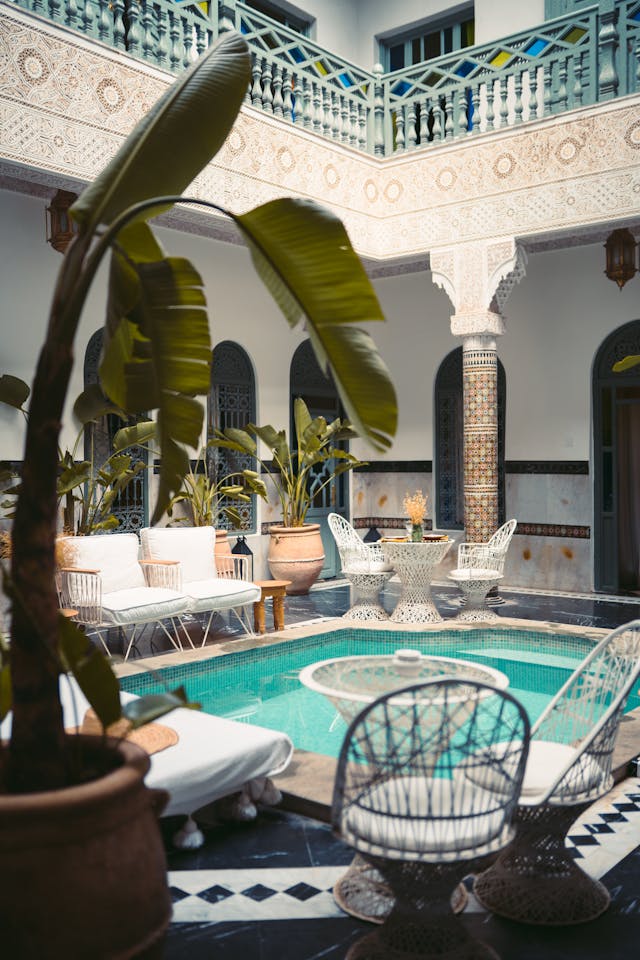
Walking through the historic quarters of Marrakech, you can still feel the strength of tradition intact: artisans hammer copper in their workshops just as their fathers did, spices are piled in perfect pyramids on the stalls of age-old markets, and rug sellers invite you into their shops with the same theatrical flair as ever. Yet just beyond the walls of the Marrakech medina, another side of the city opens up, made of concept stores, contemporary art galleries, design cafés and cutting-edge boutique hotels that draw visitors from all over the world in search of experiences that are authentic yet sophisticated.
In Marrakech, travelers can enjoy plenty of luxury experiences alongside more traditional ones, and it’s precisely in this balance between past and future that Marrakech is writing a new chapter of its history. Morocco’s most visited city feels a strong desire to protect its cultural identity, while also embracing the drive toward innovation and sustainability, in architecture, mobility, tourism and lifestyles.
It’s far from an easy challenge, but one of the four imperial cities of the Kingdom of Morocco seems to be facing it with determination and creativity, turning contrasts into opportunities.
Marrakech between the medina and the new city: two souls in constant dialogue
The historic heart of Marrakech, a UNESCO World Heritage Site, remains one of Morocco’s most iconic places, not only for its artistic and architectural richness but also for the everyday life that still fills it today. However, while the medina remains the symbol of living, authentic tradition, on my tours you’ll be able to see with your own eyes the modernization I’m talking about. It’s most evident in the Ville Nouvelle and in neighborhoods like Gueliz and Hivernage.
These neighborhoods, born during the French protectorate, are home to ever-evolving urban spaces inspired by a cosmopolitan aesthetic, multipurpose cultural centers, boutique hotels and restaurants blending local cuisine with international trends. This isn’t simple Westernization (it’s anthropologists and ethnologists who say so, not me), but rather the emergence of a new urban identity that seeks to combine aesthetics, function and respect for the social and environmental context.
To give you a few more examples, the opening in Marrakech of museums like the Musée Yves Saint Laurent, next to the famous Jardin Majorelle, or the Musée des Confluences Dar El Bacha, shows a growing focus on presenting Moroccan culture in a contemporary light, aiming not only to attract tourists but also to engage the local population more actively.
In short, as you walk through the streets of Marrakech, you’ll notice how the city is becoming an “urban laboratory”, where the global and the local meet and mix, creating a new way of living in and telling the story of the city.
Marrakech aims for a sustainable, inclusive future
One of the most interesting aspects of Marrakech’s transformation (and again, this isn’t just my personal opinion, though I think my long experience as a tour operator in Morocco gives it some weight) is the growing focus on environmental and social sustainability. Many projects and initiatives are already under way in the city, from low-impact energy solutions for new accommodation, to the promotion of responsible tourism in the surrounding rural areas, to the revival of traditional materials in urban green building. By every means, Marrakech is trying to meet a growing demand for authenticity that doesn’t upset the balance of the Moroccan landscape.
Tourism, one of the city’s main sources of income, is also evolving significantly. Alongside big resorts and more commercial experiences, slower, more mindful travel routes are developing, focused on human contact, local crafts, riad hospitality, cultural workshops and lesser-known art circuits.
You can enjoy this kind of experience on my tours, which will take you to discover the real Morocco, in step with travelers’ growing desire to get to know the country’s authentic soul and take part in tailor-made experiences that connect them with the true face of Marrakech, made of encounters, details and stories.
So Marrakech is becoming a city that is not only more modern but also more inclusive, able to offer opportunities to those who live there and not just to those who visit. And perhaps it’s precisely this tension between preservation and innovation, between deep roots and an open outlook on the world, that makes Marrakech so unique. It’s a city that refuses to be labeled, reinventing itself every day and staying true to itself while constantly changing its skin.
Lisa